How I Cut Losses and Kept My Portfolio Alive – An Expert’s Real Talk on Smarter Investing
I’ve been there—watching my investments bleed value, feeling the panic creep in. As someone who’s navigated market crashes and costly mistakes, I learned that protecting your money isn’t just about picking winners—it’s about cutting losses fast and optimizing costs. This is not theory; it’s what I’ve tested, failed at, and refined over years. Let me walk you through the strategies that saved my financial sanity when everything seemed to be falling apart. What you’ll read isn’t a success story from someone who got lucky. It’s a roadmap built on real experience, grounded in discipline, and shaped by the hard truth that preserving capital often matters more than chasing gains. This is how I kept my portfolio alive—and how you can too.
The Moment Everything Went Wrong – Facing Investment Losses Head-On
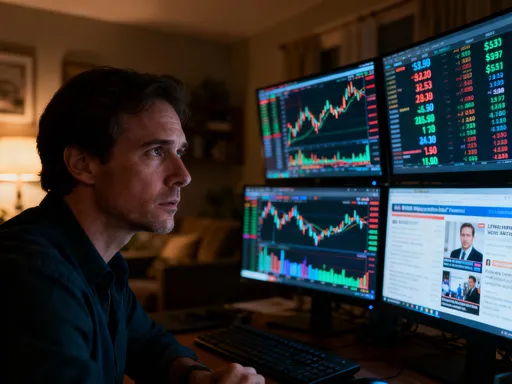
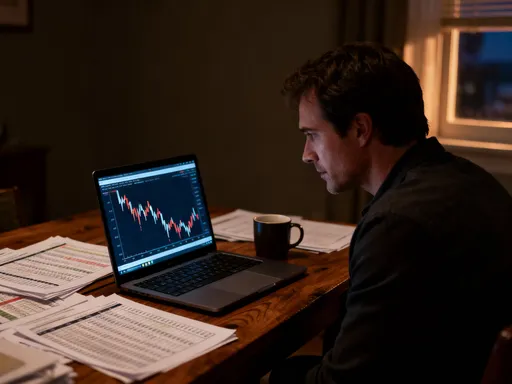
It started quietly. One morning, the markets dipped. Nothing alarming—just a 2% drop. By the end of the week, that had deepened to 8%. A few weeks later, the portfolio I had spent years building had lost nearly a third of its value. The holdings that once seemed stable—blue-chip stocks, dividend-paying funds, even a few carefully selected ETFs—were now dragging down returns. I remember sitting at my desk, staring at the numbers, feeling a mix of disbelief and dread. How could this happen? I had done my research. I had diversified. I had followed the advice of financial planners and read the reports. Yet here I was, watching hard-earned gains vanish with each passing day.
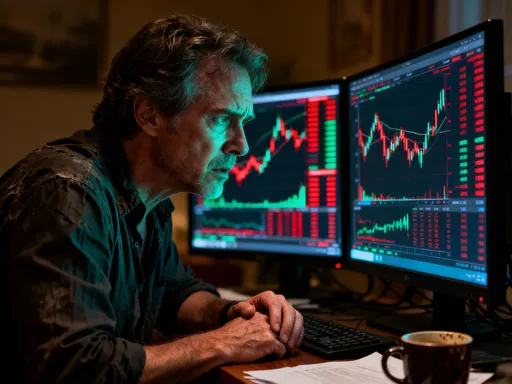
This wasn’t just about numbers on a screen. It was about security. Retirement plans. Family goals. The emotional weight of loss is something no chart can capture. That sinking feeling when you realize your financial cushion is thinner than you thought—it changes how you sleep, how you plan, how you talk about money at home. What made it worse was the sense of helplessness. I wasn’t alone. Many investors during that period shared the same story: they had believed in long-term growth, trusted the market’s resilience, and assumed volatility would smooth out. But when the downturn accelerated, assumptions crumbled. The key lesson wasn’t that the market was unpredictable—it was that my response had no structure. I was reacting emotionally, not strategically.
That moment became a turning point. I realized that damage control doesn’t begin when the portfolio is in freefall. It begins long before, in the quiet periods when everything seems fine. The real risk isn’t the market drop itself—it’s the absence of a plan to handle it. I had focused so much on growth that I neglected protection. I had optimized for returns but not for resilience. From that point forward, my investing philosophy shifted. Instead of asking, How much can I make?, I started asking, How much can I afford to lose? That question changed everything. It forced me to confront risk honestly and build systems that didn’t rely on hope or timing the market.
Why Most Investors Fail in a Downturn – The Psychology of Holding On Too Long
When markets fall, the most dangerous enemy isn’t volatility—it’s human nature. Investors often make the same critical mistake: they hold onto losing positions far too long, hoping for a rebound that may never come. This behavior isn’t rare; it’s widespread. Behavioral finance studies consistently show that people feel the pain of a loss more intensely than the pleasure of an equivalent gain—a phenomenon known as loss aversion. This emotional bias leads many to delay selling losing investments, even when evidence suggests the asset is unlikely to recover. The longer they wait, the deeper the loss becomes, and the harder it is to accept.
Another common trap is attachment. People develop emotional connections to certain stocks or funds, especially if they’ve held them for years or inherited them. There’s a sense of loyalty, as if selling means admitting defeat. Some believe that holding on long enough will eventually restore their original investment value, ignoring the fact that time alone doesn’t guarantee recovery. Others fall into the sunk cost fallacy—the idea that because they’ve already lost money, they must continue investing to “break even.” This mindset leads to pouring good money into bad investments, compounding losses instead of cutting them.
Overconfidence also plays a role. Many investors believe they can time the market or predict when a struggling asset will turn around. They watch the charts, read the news, and convince themselves that this dip is temporary. But markets don’t care about confidence. They respond to fundamentals, liquidity, and macroeconomic forces. Waiting for a rebound based on hope, rather than data, is a recipe for prolonged underperformance. The irony is that the very traits that serve investors well in bull markets—patience, optimism, conviction—can become liabilities in downturns if not balanced with discipline and objectivity.
The cost of these psychological traps isn’t just measured in lost dollars. It’s also in missed opportunities. Capital tied up in underperforming assets can’t be deployed elsewhere. Meanwhile, fees continue to accumulate, taxes may be less efficient, and portfolio rebalancing becomes harder. The longer an investor hesitates, the more they pay in both direct and indirect costs. Recognizing these patterns was crucial for me. I had to accept that emotion has no place in decision-making when protecting wealth. What was needed wasn’t more analysis—it was a system that removed the need for heroic judgment calls in moments of stress.
Building Your Financial Fire Drill – A Proactive Framework for Crisis
Just as homes have smoke detectors and businesses run emergency drills, every investor needs a financial fire drill—a pre-defined plan for responding to market stress. The goal isn’t to predict crises, but to ensure you’re not making critical decisions in panic mode. My framework consists of three core components: liquidity buffers, stop-loss thresholds, and portfolio stress testing. These aren’t rigid rules but personalized guidelines designed to align with individual risk tolerance, time horizon, and financial goals. The key is to establish them when the market is calm, not when it’s collapsing.
Liquidity is the first line of defense. Having cash or cash-equivalent assets readily available means you don’t have to sell investments at a loss to cover unexpected expenses or take advantage of new opportunities. I now maintain a buffer equal to 12–18 months of essential living expenses in low-risk, accessible accounts. This isn’t part of the growth portfolio—it’s a safety net. It removes the pressure to time the market during downturns. If I need funds, I draw from the buffer, not from long-term holdings. This simple step has prevented forced sales during past corrections and preserved my core investments.
Stop-loss thresholds are equally important. These are predetermined levels at which I exit a position to limit further losses. For example, if a stock or fund drops 15% below my purchase price and shows no sign of fundamental recovery, I have a rule to reassess immediately. If the outlook remains weak, I sell. This isn’t about being right or wrong—it’s about managing risk. Some investors avoid stop-losses because they fear being “shaken out” by short-term volatility. But without them, the risk of catastrophic loss increases. The trick is setting thresholds that are sensitive enough to protect capital but not so tight that normal market swings trigger unnecessary exits. I adjust mine based on asset class, volatility, and investment purpose.
Portfolio stress testing completes the framework. Twice a year, I simulate how my portfolio would perform under various adverse scenarios: a 20% market drop, rising interest rates, inflation spikes, or sector-specific shocks. I don’t do this to scare myself—I do it to identify vulnerabilities. What holdings would suffer most? Which assets provide stability? Where are fees eating into resilience? This exercise helps me rebalance proactively, reduce concentration risks, and ensure my asset allocation still matches my goals. It’s like a health checkup for my finances. By the time a real crisis hits, I’ve already considered the responses. I’m not inventing a plan on the spot—I’m executing one I’ve already designed.
Trimming the Fat Without Cutting Corners – Smart Cost Optimization in Practice
During a market downturn, every dollar saved is a dollar preserved. But many investors overlook how costs silently erode returns, especially when portfolios are shrinking. High expense ratios, transaction fees, advisory charges, and bid-ask spreads may seem small in isolation, but they compound over time and become magnified during losses. A fund with a 1.5% annual fee doesn’t just reduce gains—it accelerates losses. Over a decade, such fees can consume 20% or more of potential returns. In a downturn, that drag is even more damaging because the base is smaller. Optimizing costs isn’t about being cheap—it’s about being efficient.
I began by auditing every expense in my portfolio. I reviewed mutual fund expense ratios, ETF management fees, brokerage commissions, and advisory fees. What I found surprised me. Several funds I held had fees significantly higher than comparable low-cost alternatives with similar performance. One actively managed fund charged 1.8% annually—more than triple the cost of a passive index ETF tracking the same market. By switching to lower-cost vehicles, I reduced my overall portfolio expense ratio from 1.2% to 0.4%. That 0.8% difference may sound minor, but over a $500,000 portfolio, it’s $4,000 saved every year. In a down market, that’s capital that stays invested instead of being drained by fees.
I also renegotiated advisory terms. Many investors assume their financial advisor’s fee is fixed, but it’s often negotiable, especially if you have a long-standing relationship or a substantial account. I reviewed my advisor’s services and asked whether certain components could be scaled back or replaced with lower-cost alternatives. For example, instead of full discretionary management, I moved to a hybrid model where I make most decisions and pay for periodic reviews. This reduced my advisory fee from 1% to 0.6% without sacrificing guidance. I also consolidated accounts to reduce administrative overhead and eliminated redundant insurance-linked investment products that offered little value.
Another overlooked cost is trading friction. Frequent buying and selling generate commissions and tax inefficiencies. I adopted a more disciplined trading approach, limiting transactions to major rebalancing events or strategic shifts. I also shifted tax-inefficient assets into retirement accounts to minimize capital gains taxes. These changes didn’t require radical moves—just consistent attention to detail. The result? A leaner, more resilient portfolio that could withstand downturns without bleeding value unnecessarily. Cost optimization isn’t a one-time fix; it’s an ongoing discipline that pays dividends in every market cycle.
When to Hold, When to Fold – Tactical Exit Strategies That Work
Knowing when to exit an investment is one of the hardest but most important skills in investing. It’s not about timing the bottom or chasing rebounds—it’s about recognizing when an asset no longer serves its purpose. My approach is systematic, not emotional. I evaluate each holding based on three criteria: performance relative to expectations, changes in fundamentals, and alignment with my overall strategy. If an investment consistently underperforms its benchmark without justification, or if the company’s financial health deteriorates, or if it no longer fits my risk profile, it’s time to consider an exit.
The first step is defining clear exit signals. For individual stocks, I monitor revenue trends, debt levels, and competitive positioning. If a company misses earnings for two consecutive quarters and management offers no credible turnaround plan, I treat that as a red flag. For funds, I look at consistency of returns, manager changes, and style drift. A fund that claims to be large-cap growth but starts loading up on speculative tech stocks is no longer the investment I signed up for. These aren’t speculative judgments—they’re objective indicators that the original thesis has broken down.
Once I identify a failing investment, I don’t delay. I set a timeline—usually 30 to 60 days—to review the situation and decide whether to sell. Procrastination only increases risk. I place the trade during normal market hours to avoid slippage and ensure execution at a fair price. If the position is large, I may stagger the sale over a few days to minimize market impact. After selling, I document the reason for the exit. This creates a feedback loop that helps me learn from mistakes and refine my criteria over time.
One of the most valuable lessons I’ve learned is that selling isn’t failure—it’s strategy. Every exit frees up capital that can be redeployed more effectively. Holding onto a loser in hopes of breaking even ties up resources that could be working harder elsewhere. The goal isn’t to be right every time; it’s to limit losses and preserve the ability to invest again. By treating exits as a normal part of the process, I’ve reduced emotional attachment and improved long-term results. Discipline in selling is just as important as discipline in buying.
Reallocating, Not Just Retreating – Turning Losses into Strategic Shifts
Exiting a losing position is only half the battle. The real test comes next: what to do with the capital. Many investors, after cutting losses, retreat into cash and wait for the perfect opportunity. But waiting too long can mean missing recovery phases. My approach is to reallocate with purpose, not panic. I don’t jump into the next hot trend—I look for assets that align with my long-term goals and offer better risk-adjusted returns than what I sold.
After a major rebalancing, I reassess my asset allocation. Did the market shift expose an unintended concentration? Is my portfolio too heavy in one sector or too light in defensive assets? I use this moment to restore balance. For example, if equities have dropped significantly, I may increase my allocation to high-quality bonds or dividend-paying stocks that provide income and stability. If international markets are undervalued relative to domestic ones, I might shift some capital abroad. These aren’t speculative bets—they’re strategic adjustments based on valuation, diversification, and risk tolerance.
I also look for efficiency gains. The capital freed by cutting high-cost or underperforming assets can be redirected to lower-cost, tax-efficient vehicles. For instance, selling an expensive mutual fund and moving into a low-cost index ETF not only reduces fees but also improves transparency and tracking accuracy. This reinvestment isn’t about chasing returns—it’s about building a stronger foundation. Each reallocation is a step toward a more resilient, cost-optimized portfolio.
Most importantly, I maintain discipline. I don’t try to make up for losses quickly. That’s how people take on excessive risk. Instead, I focus on steady progress, compounding small advantages over time. Reallocating with clarity turns a defensive move into a strategic opportunity. It transforms loss from a setback into a catalyst for improvement.
The Long Game: Protecting Wealth Starts Before the Storm
Looking back, the most valuable lessons didn’t come from my wins—they came from my losses. The strategies that saved my portfolio weren’t flashy or complex. They were built on preparation, discipline, and a willingness to act before emotions took over. True financial strength isn’t measured by how much you make in good times, but by how well you protect what you have in bad ones. The investors who survive—and thrive—through downturns aren’t those with perfect foresight. They’re the ones who plan for uncertainty, control costs, and make decisions based on rules, not feelings.
What I’ve shared isn’t a guaranteed path to riches. It’s a practical framework for resilience. Cutting losses isn’t admitting defeat—it’s exercising control. Optimizing costs isn’t being stingy—it’s being smart. And preparing for crisis isn’t pessimism—it’s prudence. These aren’t signs of weakness; they’re marks of expertise. The best investors aren’t the ones who avoid mistakes. They’re the ones who build systems to manage them.
If you take one thing from this, let it be this: don’t wait for the storm to start building your shelter. Set your stop-loss thresholds. Audit your fees. Stress test your portfolio. Have your liquidity plan ready. Do it now, when the sun is shining. Because when the market turns, your ability to act calmly and decisively will depend on the work you did long before the crisis hit. Protecting wealth isn’t a reaction—it’s a practice. And like any practice, it gets stronger with time, attention, and repetition. That’s how you keep your portfolio alive. That’s how you stay in the game for the long run.